
Helium: Are We really running out?
A common narrative today is that helium is in limited supply and may soon run out.
If this is the case, is the revival of Lighter-than-Air technology (LTA) already doomed?
Let’s take an honest look at this natural resource and uncover what’s really going on with helium.
Helium's source
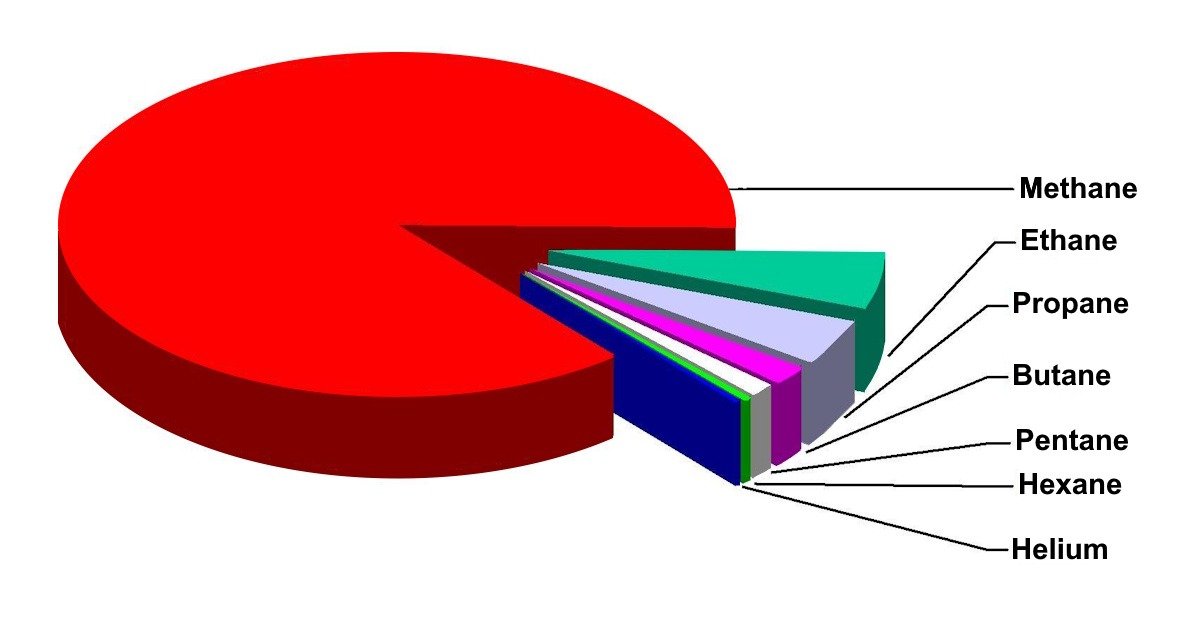
Helium is one of the most abundant resources in the universe and one of the gases found in natural gas, a hydrocarbon that’s made up primarily of methane and ethane and several other gases.
Helium's Discovery
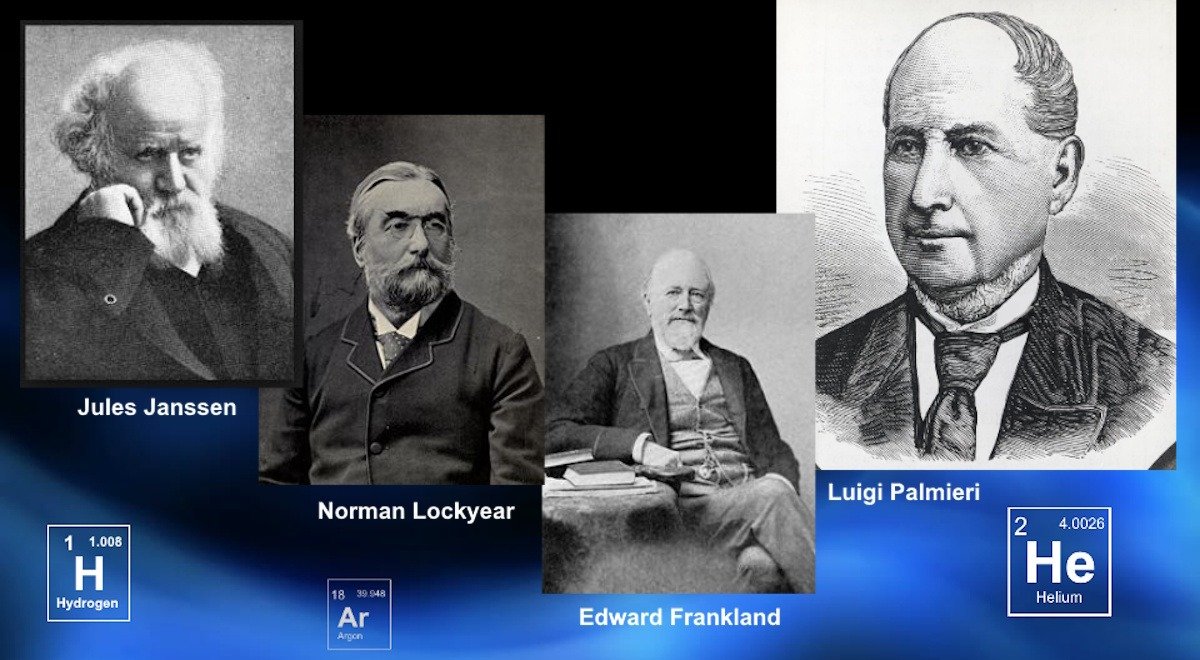
The first evidence of helium’s existence was obtained in 1868 by French astronomer Jules Janssen while observing the sun.
Later, English astronomer Norman Lockyer observed the same phenomena and, together with English chemist Edward Frankland, named the unknown gas “Helios” after the Greek word for the sun.
Helium was eventually discovered on earth in 1882 by Italian physicist Luigi Palmieri.
It’s been playing an important role in human life ever since.
Dexter, Kansas
In 1903, helium was discovered by accident in Dexter, Kansas.
The town’s people had gathered to watch the historic lighting of a natural gas well that would have brought prosperity to the town.
However, after repeated attempts to ignite the gas failed, it was scornfully nicknamed “wind gas.”
It was nearly 2 years before Kansas University professors identified it as a mixture of nitrogen and 2% helium.
Eventually a plant was erected to supply helium to the Navy for use in their airship program.
This led congress to recognize the gas as a critical war material as outlined in the Helium Act of 1925.

The Federal Helium Reserve
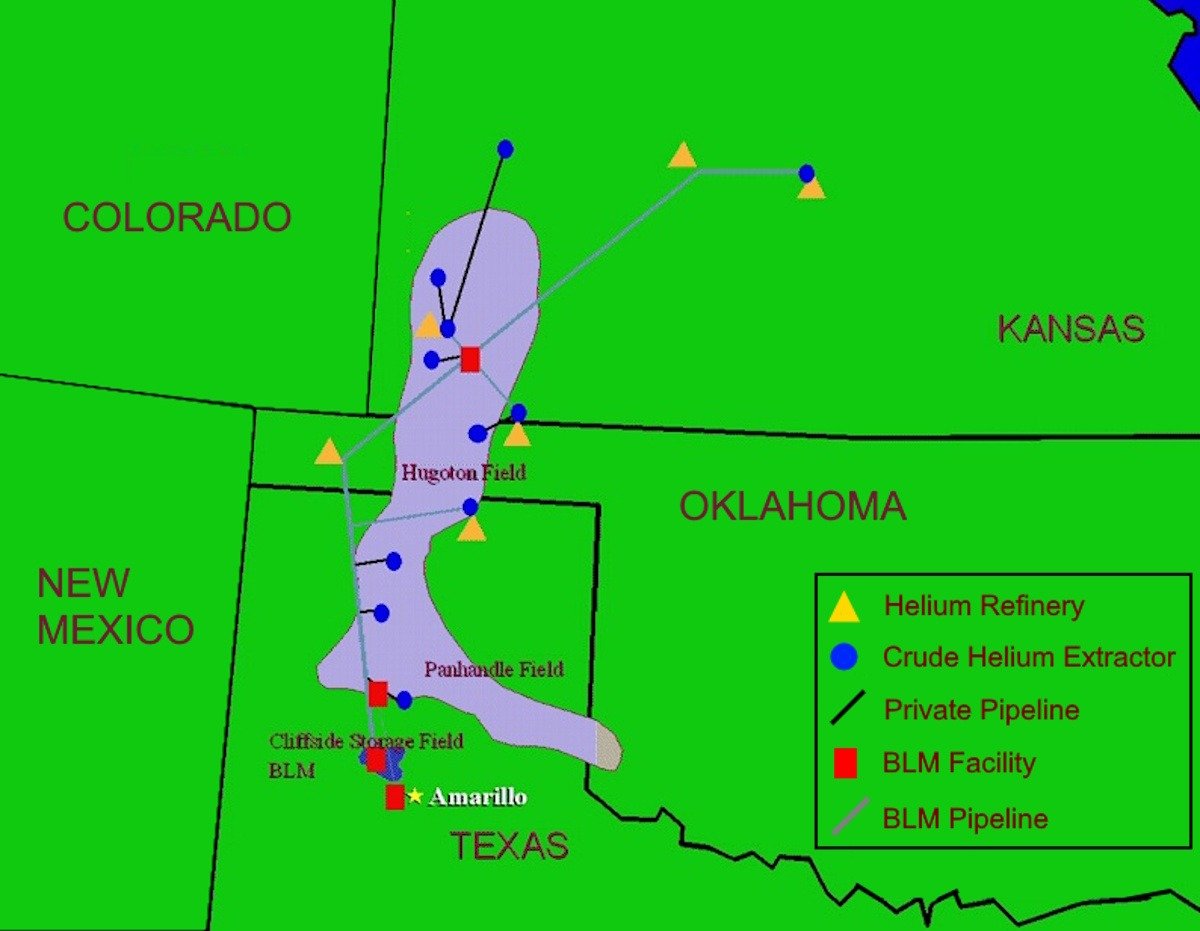
In 1929, the Bureau of Mines built an extraction / purification plant outside Amarillo, Texas where it established the Federal Helium Reserve.
In an effort to build the reserve in the 1940s, incentives were offered to gas producers to sell their crude helium to the government.
During World War II, demand for helium continued to increase in part because of its use in Navy blimps.
Rocket development and scientific research in the 1950s and 60s further expanded the federal helium program.
Eventually, the helium industry was privatized with the Helium Privatization Act of 1996, and the US government began selling off its crude helium to privately owned refineries.
Private Company Buys Federal Helium Reserve
In 2024, the Bureau of Land Management completed the sale of the Federal Helium Reserve and its assets, which included storage for 35.3 billion cubic feet of helium as well as 425 miles of pipelines spanning Texas, Kansas, and Oklahoma.
The new owner, Messer, acquired the assets in fulfillment of the Helium Stewardship Act of 2013.[1]
Helium's Global Uses
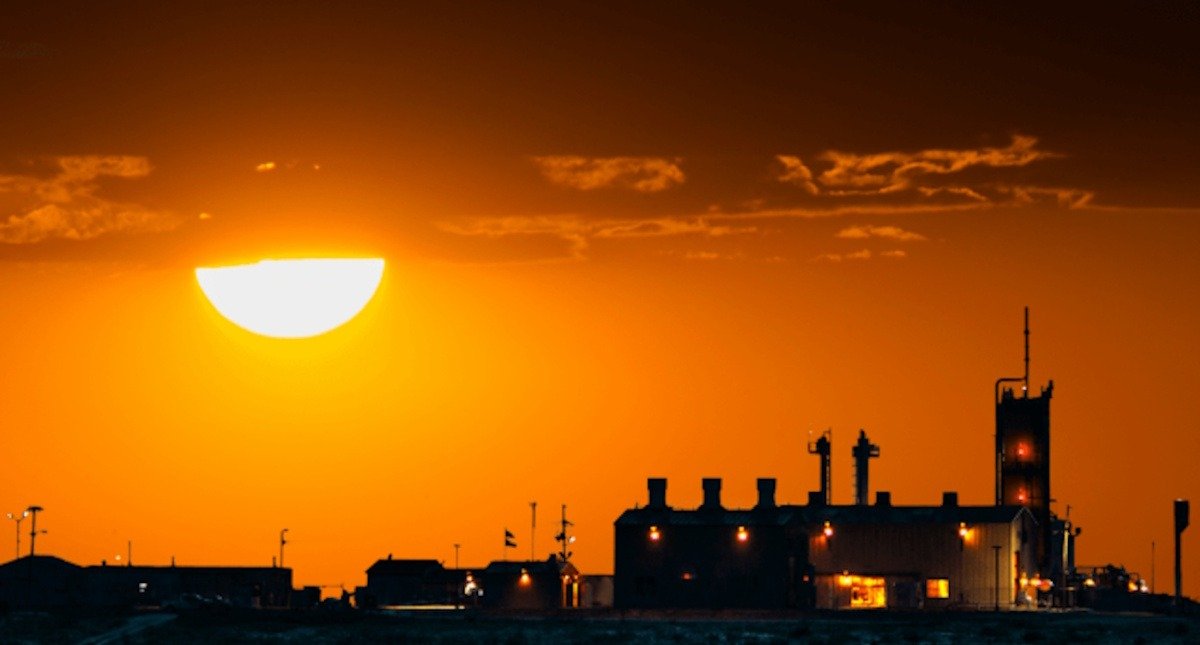
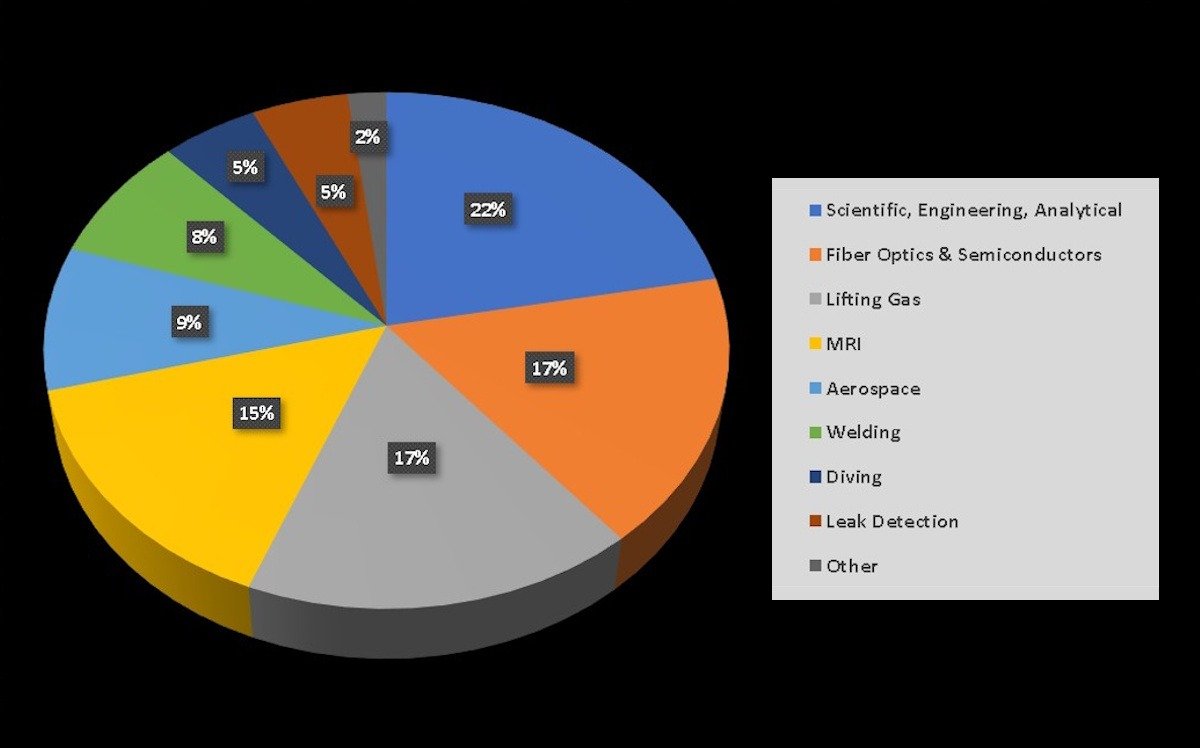
This pie chart shows helium’s global applications as of 2025, which are not only increasing in quantity but also growing in volume at a 6.5% CAGR (Compound Annual Growth Rate), a direct result of the maturing of the world’s economies.[2]
US Production vs. Consumption
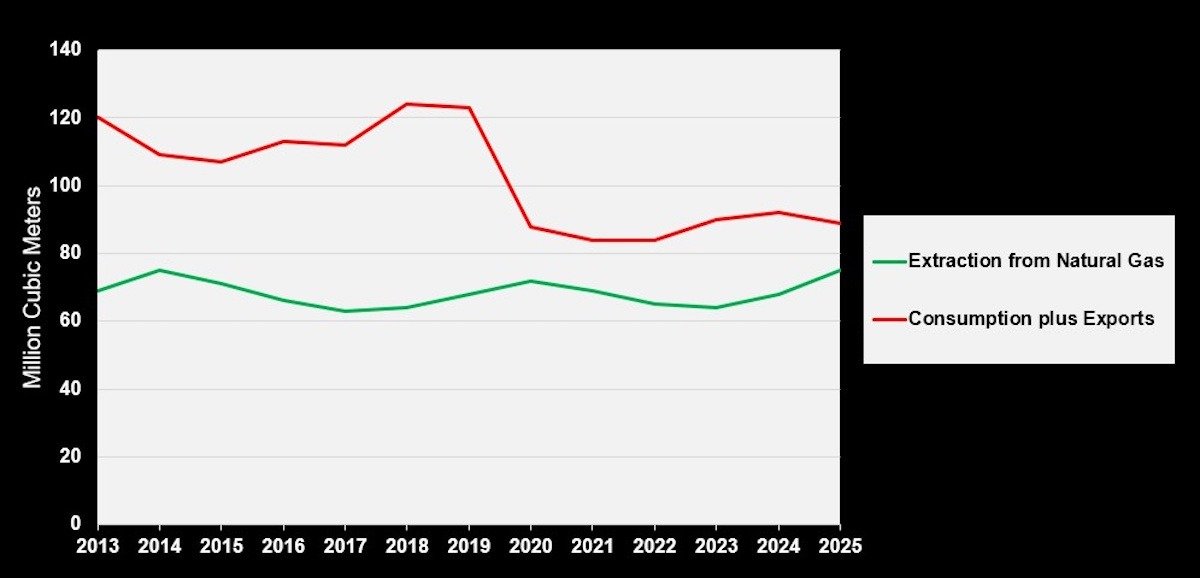
As shown in the line chart below, US helium consumption plus exports far exceed domestic production, resulting in a deficit that is then taken from national reserves, with the net outcome being a decreasing national supply.
This game of numbers provides the US media and other influencers the opportunity to decry our dwindling helium supply and promote the narrative that we will soon run out.
Creating the belief that helium is scarce provides the opportunity for price manipulation with little danger of negative backlash.
Several US universities and research centers have already complained that the price of helium has increased more than 400% in the last 5 years alone.[1]
Ironically, while the helium crisis is being perpetuated by Western media in every corner of the internet, they take no issue with customers filling their party balloons with the precious gas, especially given that lifting gas consumption makes up 17% of the overall market.
This is revealing, as it’s not about curbing the use of helium; on the contrary, it’s about maximizing profit, which would not be possible if they demanded reductions in its consumption.
Meanwhile, back in the real world, no less than 6 other countries are building their helium reserves and selling the resource on the open market at a much lower price.[2]
Global Helium Production
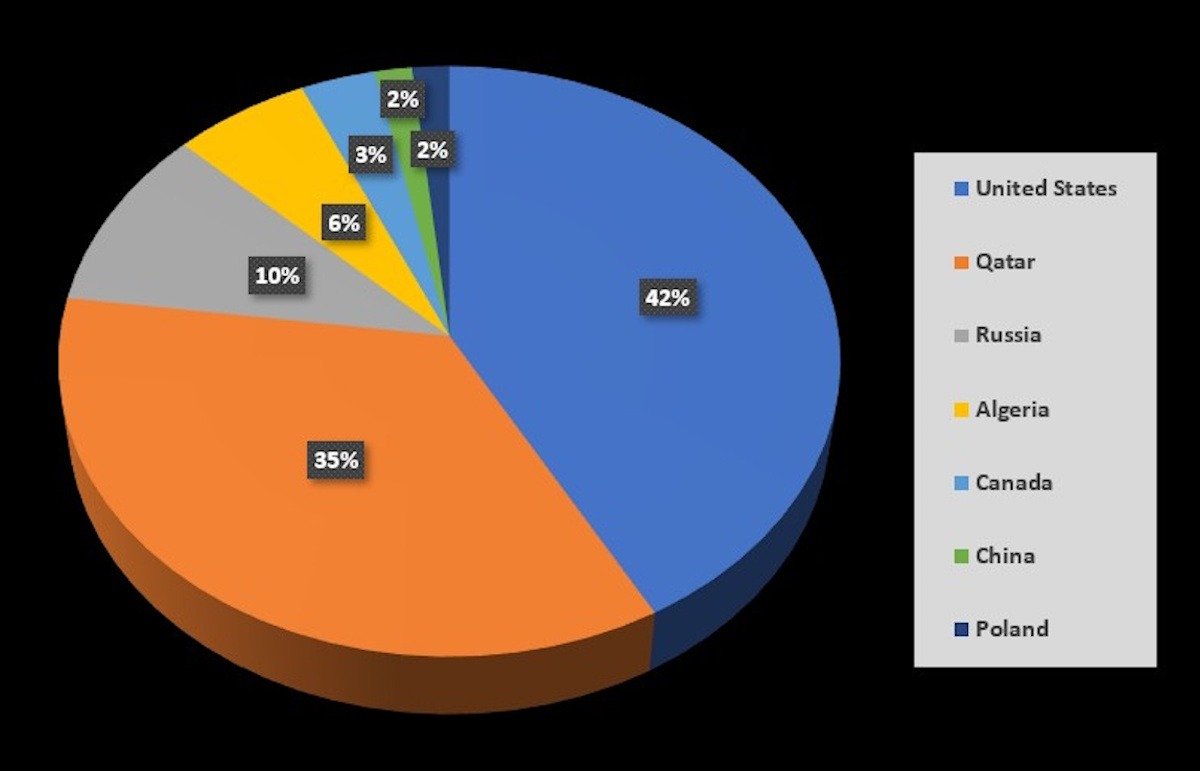
There are at least 6 other countries besides the US that are actively building their helium reserves.
Helium production today is primarily a byproduct of natural gas drilling, making its discovery more happenstance than scientific.
However, due to rising demand, entrepreneurs are more actively seeking new methods for finding helium in the environment.
And just like the evolution of oil exploration, new and better methods for finding helium are being developed, which will inevitably lead to the discovery of larger deposits.
To push the point further, only 7 countries are listed on the pie chart, but there are 196 countries globally, which include vast areas of our planet’s surface, both above and below the oceans, that are yet to be explored for this natural resource.[2]
And then we have the discovery in Tanzania.
What's Happening in Tanzania?
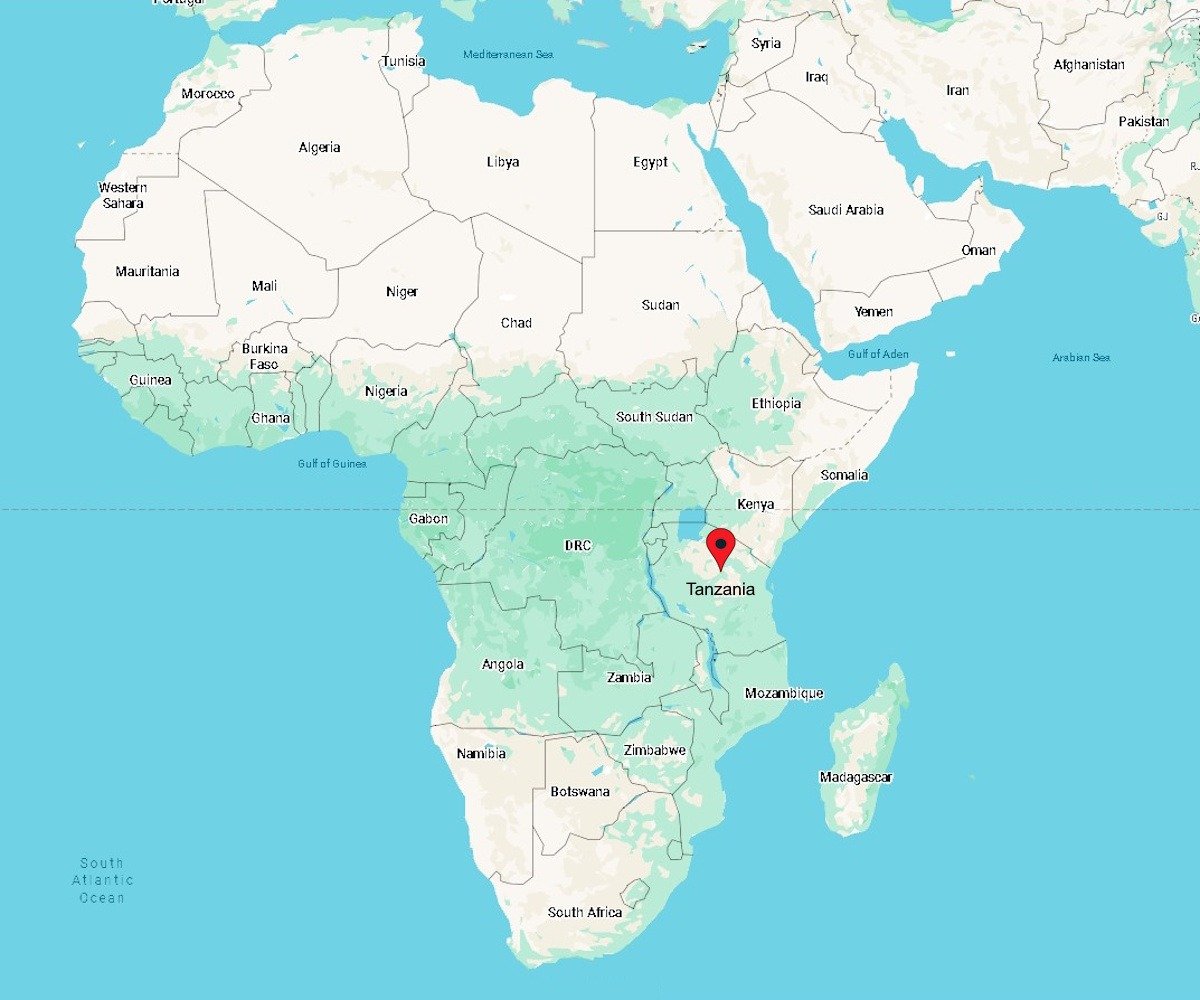
In 2016, it was announced that scientists from the University of Oxford discovered a massive helium field in Tanzania.
“We sampled helium gas and nitrogen, just bubbling out of the ground,” said those who were involved in the discovery.[3]
A study conducted in 2025 by the same scientists estimates the helium field holds over 138 billion cubic feet of the gas, which will place Tanzania among the world’s top helium producers once its mining license is approved later this year (2026).[4]
What’s important is that this discovery was not the result of natural gas exploration but one of the first attempts to locate helium itself.
What’s not surprising is that the mainstream media is mostly ignoring the discovery or downplaying its impact on the global helium market.
As the demand for helium continues to rise and exploration techniques improve, discoveries like the one in Tanzania will become commonplace.
Global Natural Gas Production
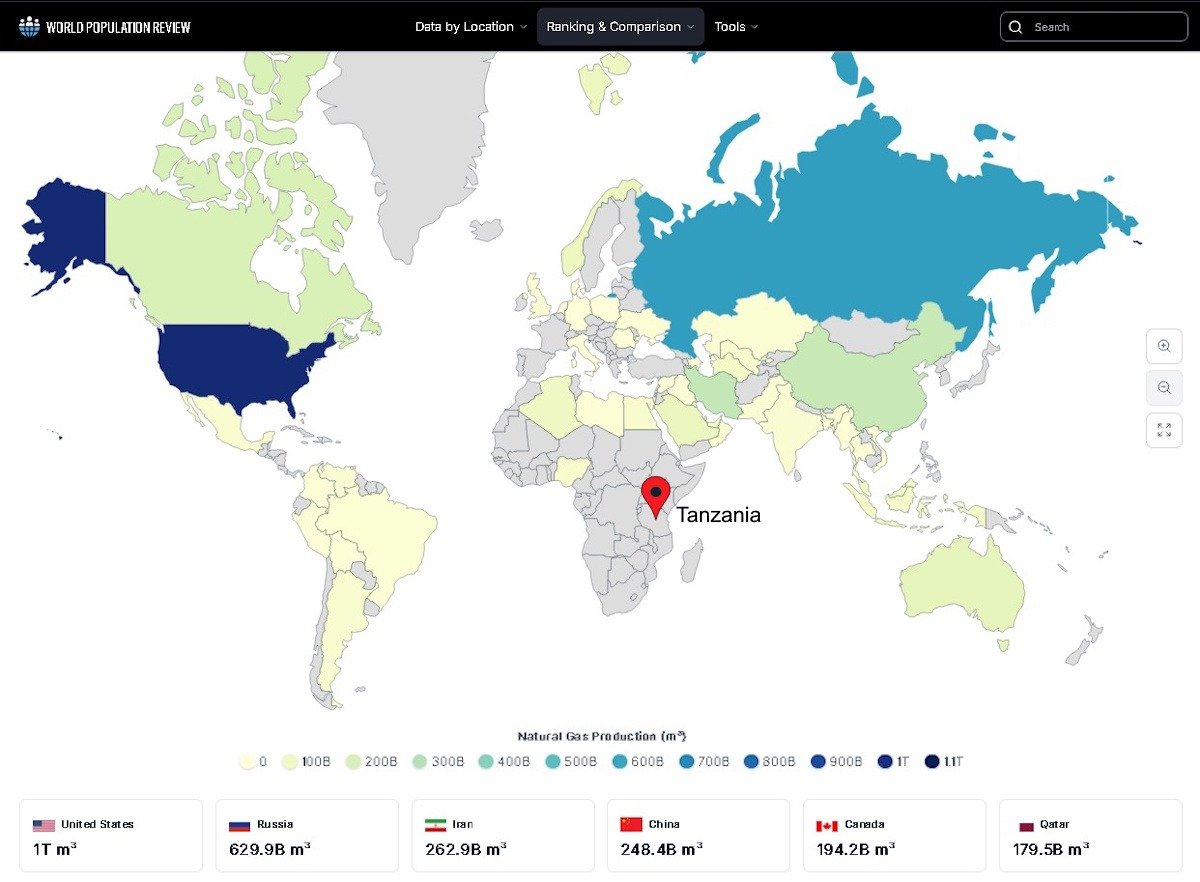
The map below ranks the natural gas producers of the world; notice that China is ranked fourth.
This has led many to ask if China is being honest about the extent of its helium reserves because it allegedly only contributes about 3% to global helium production.
Additionally, given that Russia’s land mass is more than twice that of the US, it could easily be argued that they haven’t fully realized the magnitude of their natural gas or helium reserves.
Besides the discovery in Tanzania, what additional helium and hydrocarbon resources will be found on the African continent or the many other regions shaded in grey, which currently have no ranking?[4]
Like any natural resource, too much natural gas or helium in the global market can drive pricing below the break-even value, severely impacting the profits of its producers.
Little profit means little incentive for exploration of new sources.
Helium: limited resource or abundant supply?
When the first oil well was drilled in Titusville, Pennsylvania, in 1859, producers like John D. Rockefeller of Standard Oil began to promote the idea that oil was in limited supply and would probably run out in a few years.
They felt this was necessary to keep the price per barrel above a break-even value, as there was tremendous pressure from competition in the oil industry of that day, which regularly pushed the price so low it threatened to cause the entire industry to go bust.
That same message of scarcity has been promoted repeatedly for the past 167 years.
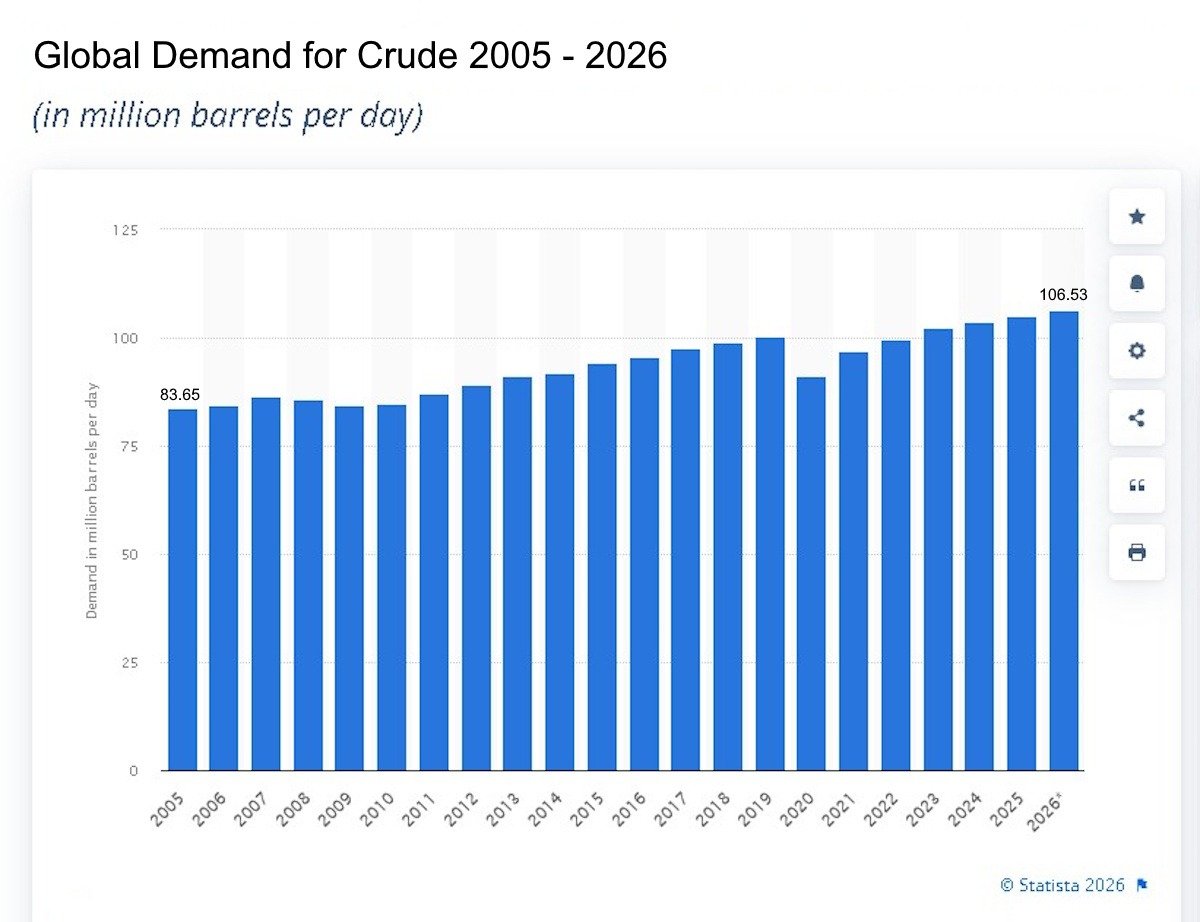
Today, our global consumption of oil is in the trillions of gallons annually, with 1.6 trillion gallons being consumed in 2024 alone.[5]
Feeding this consumption is rising demand, which has increased at an average rate of 43.7 million gallons per year since 2005.
Couple the past consumption with the admittance by prominent oil producers like Saudi Arabia that they cannot accurately determine the vastness of their oil reserves, and you begin to see there is a paradox here.
On the one hand is the propaganda of dwindling supply, and on the other is the realization that consumption has reached unfathomable levels, with producers unable to determine the vastness of their supply.
This is significant because helium, a byproduct of natural gas drilling, comes from the same source as hydrocarbons.
It should be mentioned that the scientific community believes helium is created “through the radioactive decay of heavy elements like uranium and thorium“, but this is only a theory, as they have not been able to create helium in a laboratory environment.
We hold the position that helium and hydrocarbons come from the same source and, despite the propaganda, that source is not definitively known yet.
If you disagree with this analysis, please keep reading.
Based on past consumption alone, it should be obvious to everyone at this point that the source of our hydrocarbons isn’t dead dinosaurs or prehistoric organisms that decayed over millennia.
Helping to support this conclusion is the reality that today’s oil drilling often reaches depths up to 17,000 feet below the fossil line, well below where the source for “fossil fuels” should be located.
- Fossil Line: the maximum depth below the Earth’s surface where the fossils of prehistoric organisms can be found—approximately 16,000 feet.
And then, there are the tar pits.
What About the Tar Pits?
A tar pit is a location on the Earth’s surface where naturally occurring crude oil, a hydrocarbon, has defied gravity and pushed its way to the surface, creating a small pool or lake.
Because this petroleum contains a small amount of water, when it reaches the surface, the water evaporates, leaving a thickened pool that resembles tar or, as some would suggest, liquified asphalt.
There are no fewer than 5 major asphalt lakes and many smaller pools around the world, including the La Brea Tar Pits in Los Angeles, California.[6]
These features often contain well-preserved fossils of prehistoric animal species, so they are of great interest to the scientific community.
What’s important is that these locations are still active even today.
If hydrocarbons are a limited resource, then how is it possible that they bubble to the surface from the fossil line 17,000 feet below even though we’ve extracted trillions of gallons each year for nearly 167 years?
Again, the paradox!
And then, there’s Titan.

What About Titan?
In 2005, as part of the Cassini-Huygens space mission, the Huygens probe parachuted to the surface of Titan, Saturn’s largest moon.
What it found in the minus 300-degree-Fahrenheit climate was an abundance of hydrocarbons with lakes of liquid methane fed by rain composed of hydrocarbons falling from the moon’s murky atmosphere.
Additionally, there are dunes of coal-like hydrocarbons along the moon’s equator.
Consider that for a moment, the hydrocarbons are on the surface of Titan—no mining or drilling required!
Experts have estimated that Titan, which is one-fifteenth the size of Earth, contains more than 100 times the hydrocarbons of all known sources on our planet.[7]
And the most interesting part: there’s never been organic life on Titan.
Meaning the hydrocarbons are abiotic—not formed from living organisms.
If the hydrocarbons didn’t originate from dead dinosaurs and prehistoric organisms, then where did they come from?
One can only assume they are the result of whatever is happening below the moon’s surface, and if that’s the case, then it can be argued that hydrocarbons are “renewable”—a proposition that’s quite controversial given the money that’s been spent promoting today’s fossil fuel propaganda.

Fossil Fuels: Fact or Fiction?
Where did the term “fossil fuels” originate?
It all began with a paleontologist named Barnum Brown, who was trying to win the “Bone Wars”; Dino the Brontosaurus, a dinosaur that never existed; and a company named Sinclair Oil, who was trying to outdo its competitors.
The condensed version goes something like this: In the early 1900s, Sinclair Oil, which was owned by Harry Ford Sinclair, wanted to one-up its competition by convincing the public that its products were better because they were refined from the oldest oil.
So, they contracted Barnum Brown to create a report promoting the theory that oil came from decayed dinosaurs. Barnum Brown needed the money because he was trying to win the Bone Wars, a competition between fellow paleontologists to see who could dig up the most dinosaurs.
In cooperation with Sinclair Oil, Barnum Brown created a dinosaur that did not exist and named it Dino the Brontosaurus, which became Sinclair Oil’s mascot. Dino was marketed as a lumbering giant, the largest of all dinosaurs, and a vegetarian so as not to appear threatening to the public—especially children.
Sinclair Oil promoted its mascot all around the US along with its marketing message. Dino the dinosaur appeared at the World’s Fair in Chicago in 1933, the Macy’s Thanksgiving Day Parade in 1963, and eventually appeared with 8 other dinosaurs during the New York World’s Fair in 1964.
It wasn’t until the 1970s that the Brontosaurus was revealed to be a concoction of Barnum-Sinclair imagination.[8]
After floating the dinosaur fossil theory for many decades, it became obvious that oil consumption around the world had far exceeded what the extinct dinosaur population could provide.
So, in keeping up the limited resource propaganda, the scientific community switched the theory to prehistoric plants and marine organisms.
While many scientists today realize that hydrocarbons don’t originate from fossils, they dare not contradict the reigning narrative for fear of losing funding for their research projects.

The Earth is Leaking Helium Into Outer Space
The propaganda surrounding helium has been spread far and wide—even reaching the Moon and beyond.
I recently read an article that suggested Earth is losing its helium to outer space because the gas, which is composed of the smallest of molecules, leaks from tiny cracks in the planet’s surface, where it then flies to the upper atmosphere to escape gravity and enter outer space.
It went on to say that we would soon run out because helium exists in limited quantities.
I thought this propaganda would be a humorous way to wrap up our discussion on hydrocarbons and helium.
In 2019, the European Space Agency announced that it had discovered the Earth’s atmosphere extends well beyond the exosphere and includes the region beyond the moon.
Based on observations made by the SOHO spacecraft, which was launched in 1995, there is a cloud of hydrogen atoms called the geocorona that extends more than 390,000 miles from Earth.[9]
That’s a lot of hydrogen, especially if we are to believe, as with all hydrocarbons, it’s a limited resource.
Making this more interesting is the fact that hydrogen only makes up .55 parts per million of the Earth’s atmosphere where helium comprises 5.24 parts per million—nearly 10 times the concentration of hydrogen.
If you consider that helium is the next most buoyant gas on the periodic table behind hydrogen, you could argue that wherever there’s hydrogen, there is also helium and probably in greater concentrations.
And it only gets better.
According to the scientific community, Earth is 4.5 billion years old.
That’s right; according to the scientific community, the Earth has been leaking hydrogen and helium into space for 4.5 billion years!
That’s a long time to leak something that’s allegedly in limited supply; shouldn’t we have run out by now?
I’m just going to stop here and let you decide which seems more logical: a natural resource that’s allegedly in limited amounts that has leaked into space for 4.5 billion years but remains in sufficient quantities below Earth’s surface to supply millions of cubic feet per year and still have undiscovered reserves available.
Or a natural resource that’s being created by processes deep within our planet that we don’t understand and in quantities so great that large subterranean reserves have collected with the excess bubbling to the surface to escape into our atmosphere and fill a 390,000-mile void in space.
If you choose the latter, then you’re in danger of being labeled a heretic because you are conceding that helium is renewable and, by association, hydrocarbons as well since both resources can be subjected to the same logical arguments and conclusions.

Footnote Sources
For a deeper dive into the footnoted topics on this webpage, see the following sources:
- US Government Sells Helium Reserve
- Helium Production Report 2021-25
- Helium Discovered in Tanzania
- Tanzania Sees Fortune in High-Priced Helium
- OPEC Annual Stats Bulletin 2025
- Tar Pits of the World
- Titan’s Surface Organics Surpass Hydrocarbons on Earth
- How Sinclair Oil’s Dinosaur Mascot Shaped Our Beliefs
- Earth’s Atmosphere Extends to the Moon and Beyond