
Direct Access From Anywhere to Everywhere
Today, shipping by vessel is considered the most fuel-efficient method for moving products between the world’s landmasses, but as seen in the map above, the coastline is the final destination for this transportation technology.
Beyond this point, ground-based transportation costs, duties, taxes, and other fees significantly increase the cost of the products being shipped inland.
Lighter-than-Air technology (LTA) will prove itself the superior transportation technology because it possesses greater fuel and time efficiency and because it uses the Earth’s atmosphere as its transportation infrastructure, providing it with unobstructed access to all geographic locations.
There are no coastlines with LTA.
Landlocked Countries
There are 44 countries that have no direct access to the sea routes of the world because their path to open water is blocked by a neighboring country.
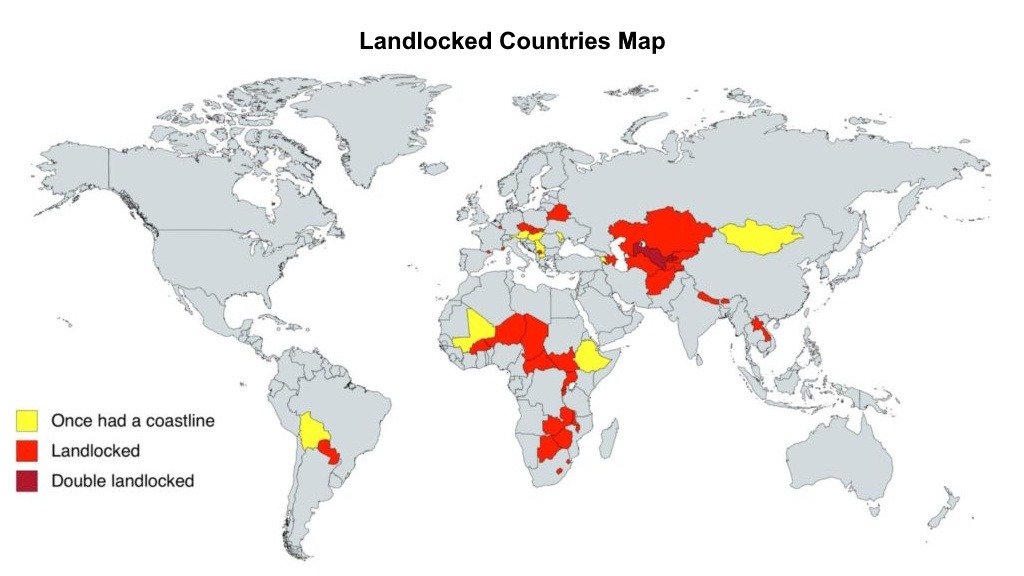
The Economic Impact
It’s a documented fact that having direct access to the world’s sea routes enhances a country’s economic potential as it serves to decrease the overall cost of imports, exports, and trade as well as provide the financial benefits of having a coastal economy.
Landlocked countries, on the other hand, have the added burden of spending more on trade-related transportation and of ensuring they maintain healthy relations with their neighbors so as not to negatively impact their access to the nearest maritime port.
It’s possible for one country to hold another country’s trade hostage by refusing access to its seaports or by charging exorbitant rates for entry, as well as the possibility the region could be deemed unsafe due to political unrest.
One example of the negative impact on imports is food, which typically costs landlocked residents three times more versus those with direct access to sea routes.
Landlocked and War-Torn
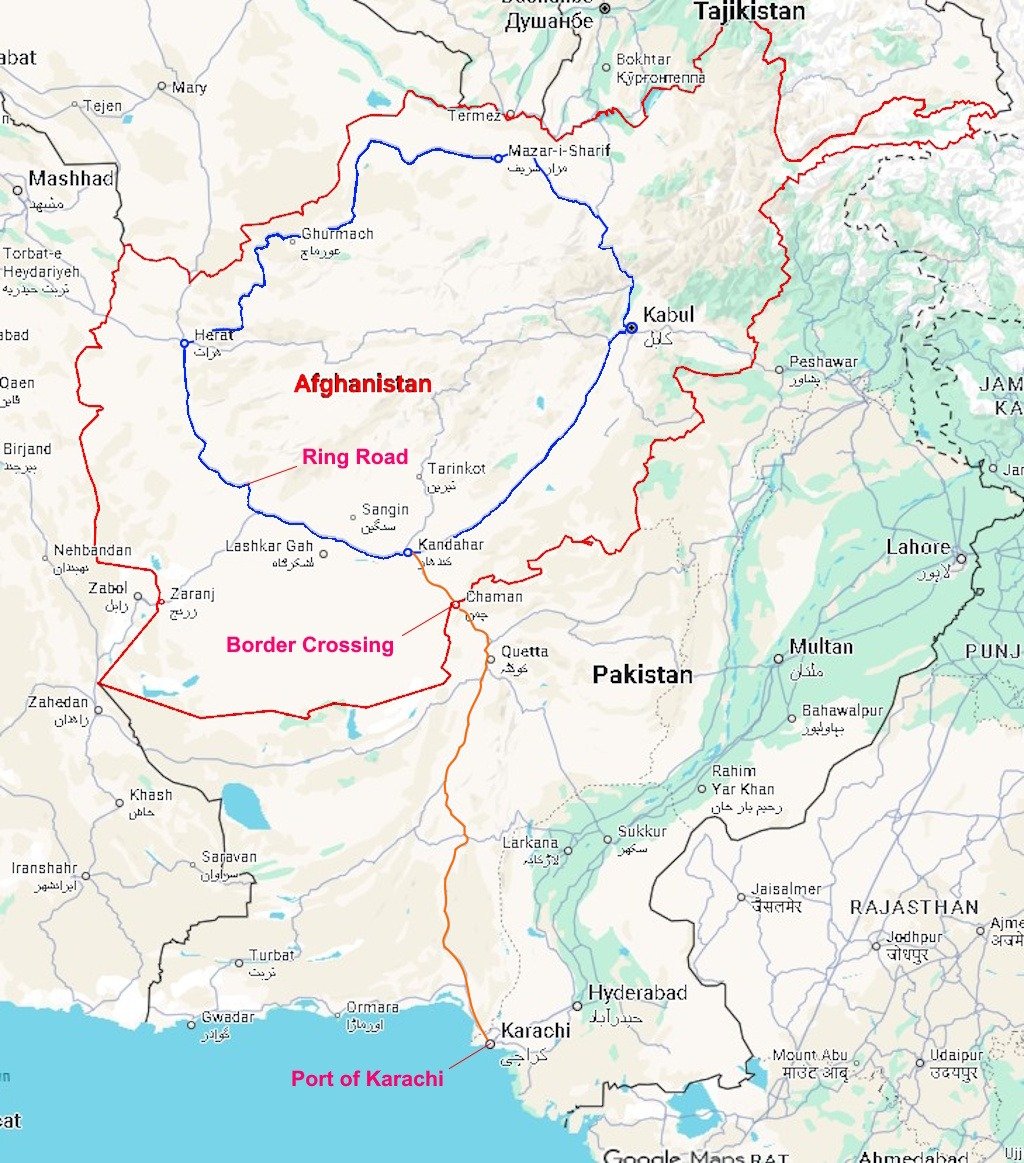
Afghanistan is a good example of how being landlocked exponentially increases import costs for war-torn countries.
During the US occupation, which is still ongoing, virtually all supplies flowing into Afghanistan pass through Pakistan’s sea ports.
Of the supplies, diesel fuel is the product in highest demand, as it is used in virtually all military vehicles as well as the multitude of generators powering the military bases.
Due to logistics costs, the US is spending on average $400 per gallon for diesel, with the total consumption for 2008 alone being 816 million gallons at an estimated cost of more than $326 billion.
Like all supplies entering Afghanistan, the fuel is transported from Pakistan’s sea port north to its border and then into Afghanistan on trucks owned and operated by local third-party trucking companies.
Only National Highway 1, also known as the ring road, provides access to most of the regions in Afghanistan, with its different segments being controlled by multiple local warlords.
So, it’s no surprise that nearly half of every gallon of fuel is stolen before it reaches its intended destination.
In extreme cases where the fuel must be airlifted, the cost per gallon can exceed $1,000.
According to the US Government Accountability Office, or GAO, in June of 2008 alone, 44 trucks carrying 220,000 gallons of fuel were lost due to attacks and other events while delivering to the Bagram Airfield.
In addition, it’s been reported that during this period, nearly one-third of the Taliban’s operating budget was being funded by their tolling of US and NATO supply convoys.
Adding to the overhead, there have been several occasions when Pakistan would close its border with Afghanistan for the purpose of negotiating greater fees from the US and NATO for the use of its ports and border crossings, effectively holding all supplies hostage until the issue was resolved in their favor.
> > Click here for “The Cost of Fuel in Afghanistan” article < <
Global Chokepoints
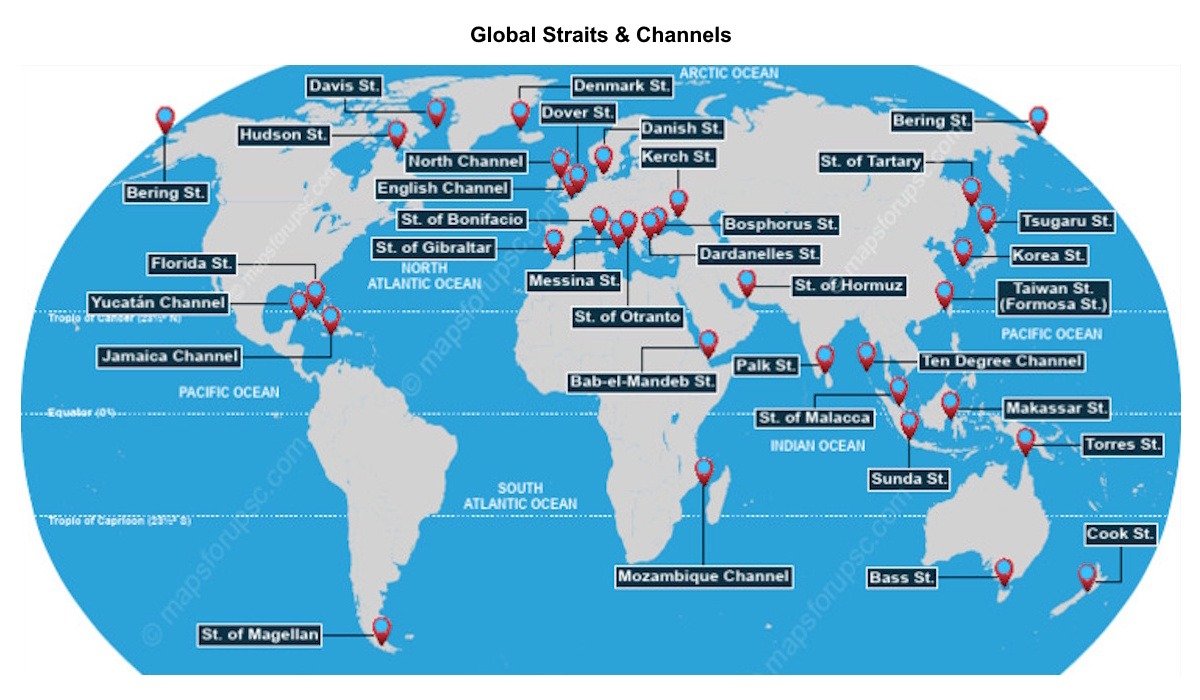
As demonstrated by the blocking of the Strait of Hormuz in the 2026 US-Israeli war with Iran, restricting traffic through just one maritime chokepoint can significantly impact the global economy.
According to sources, about 25% of the world’s seaborne oil trade and 20% of the world’s seaborne LNG trade pass through the Strait of Hormuz. Any disruption will have huge consequences for global oil and LNG markets and negatively impact all industries dependent on hydrocarbons.
> > Click here for the “Strait of Hormuz Factsheet” < <
Compounding the issue, as shown in the map, there are more than 30 chokepoints around the world.
LTA is the Solution
Lighter-than-Air technology (LTA) is the solution for landlocks and chokepoints because it uses the Earth’s atmosphere as its transportation infrastructure, providing unobstructed access to all geographic locations.
LTA's Advantage Over Today's Air Transportation
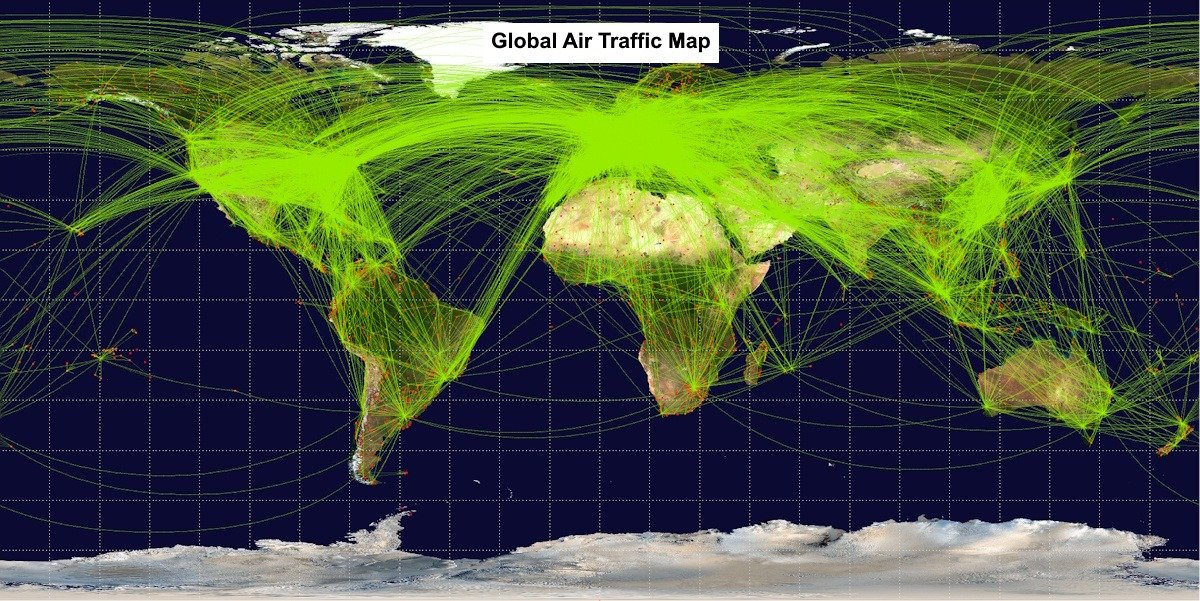
Many will argue that today’s air transportation already provides access to a multitude of global destinations.
This argument is valid but fails to acknowledge the high cost and gross limitations of this technology.
Besides LTA’s efficiency advantages, which can be reviewed on our “LTA Efficiency Stats” webpage, LTA does not require the extensive build-out of ground infrastructure such as runways, taxiways, tarmacs, air traffic control towers, landing light systems, and all the associated subsystems needed to support fixed- and rotor-wing aircraft. Nor does it require the maintenance and upgrade costs associated with this type of ground infrastructure.
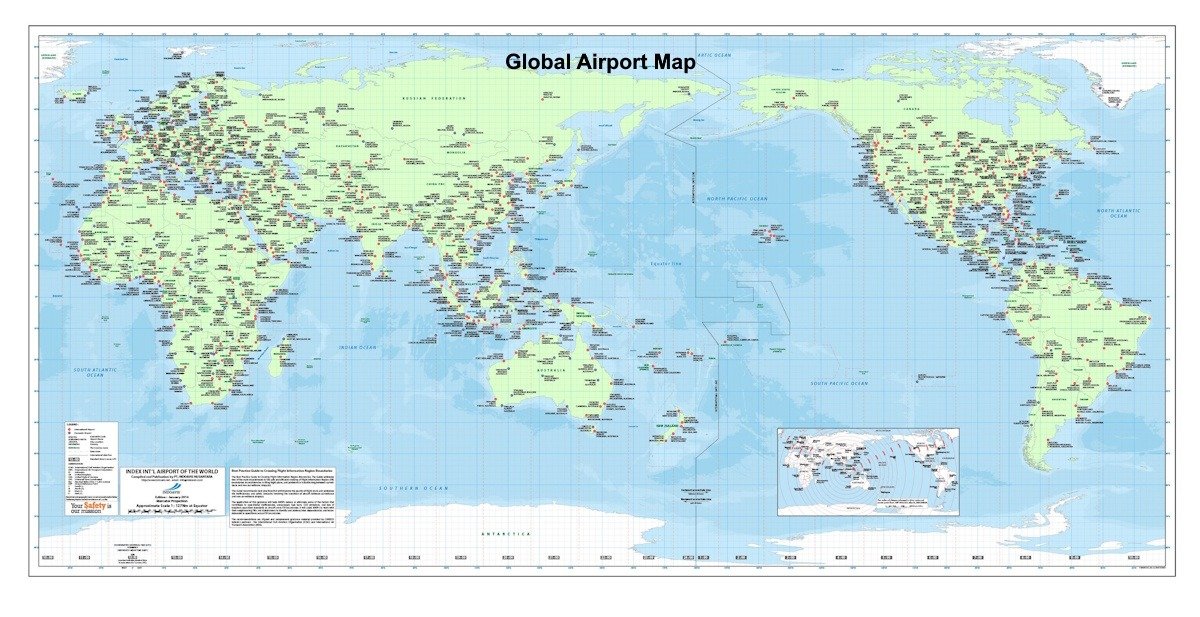
As an example of the size and cost of this extensive ground infrastructure, one of the busiest airports in the US, Chicago’s O’Hare, which was built in 1940, has grown to occupy more than 7,200 acres and is currently undergoing a remodel estimated to cost more than $8 billion.
Compounding the issue further is the fact that there are 13,000 airports of various sizes in the US alone, with the global number exceeding 41,000.
Tomorrow's Transportation Technology
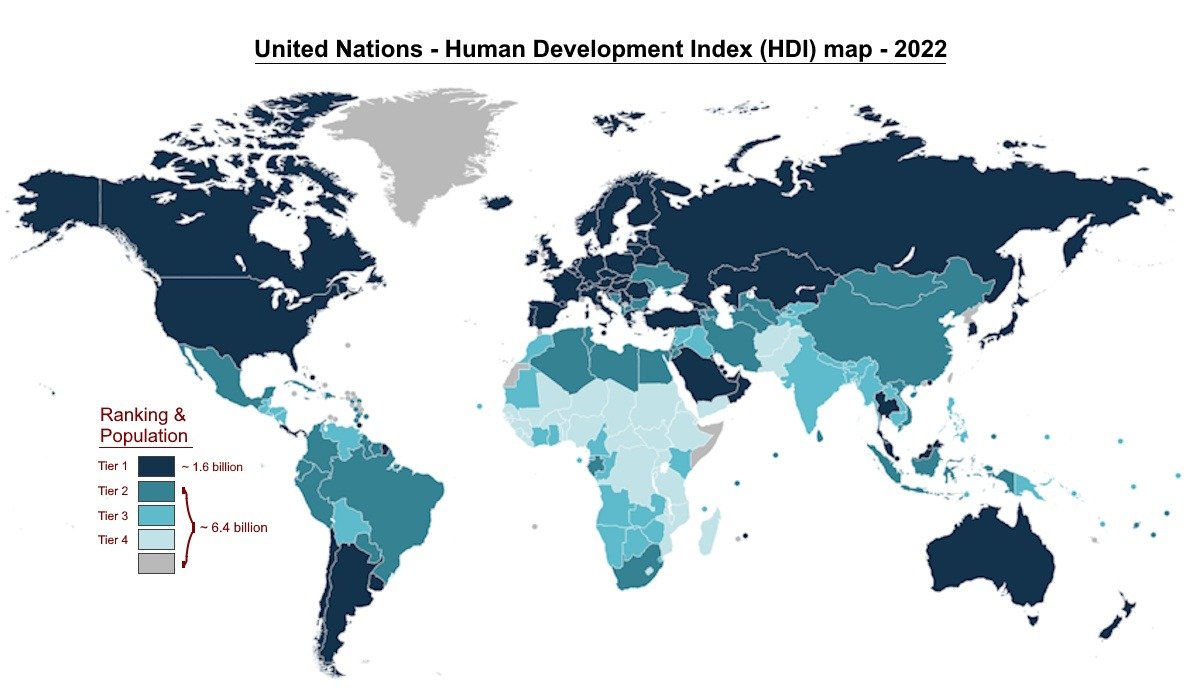
Because 80% of the world’s population of 8 billion people are still living in developing countries, as displayed in the HDI map below, the transportation needs of tomorrow will far surpass those of today.
For this reason, we must rethink how we transport people and products.
Tomorrow’s transportation technology must participate in a better economy of fuel and time, be more flexible, have greater capability, and possess an improved synergy with the Earth’s many natural resources.
Lighter-than-Air technology (LTA) embodies all of these attributes in that it possesses a superior fuel and time efficiency versus today’s transportation technologies; has a multi-market application; possesses greater capability in that its transportation infrastructure does not impose size, weight, or speed limitations; and better utilizes the Earth’s natural resources such as gravity, wind, and fuel.
No other transportation technology possesses these advantages.
More Resources
For a deeper dive into LTA’s superior fuel and time efficiency and synergy with our planet’s natural resources, check out the following webpages and video presentations: