
Safety & Survivability
How safe is modern air travel?
With the FAA’s Air Traffic Organization (ATO) handling more than 44,000 successful flights per day in the US alone, it’s easy to forget there’s still a danger in flying.
Thankfully, there have been relatively few fatalities with respect to the total number of flights annually.
However, to make a fair comparison between LTA (Lighter-than-Air technology) and commercial aviation, we must examine the real dangers involved in today’s air travel.
For example, according to a January 26, 2026, Forbes article, 548 people died in aircraft accidents in 2025, representing a 30% increase over the 404 fatalities for 2024 and the highest number of deaths since 2018 in which there were 962 fatalities.
Compounding the problem is the reality that once an aircraft is airborne, if fire breaks out in the cockpit or cabin or any mechanical problems arise, the crew must first locate an available airport for an emergency landing and then descend to a lower altitude.
In some cases, it can take as much as 30 minutes or more to get the aircraft safely back on the ground, which is problematic with a smoke-filled cabin given that the overhead masks only supply about 10 to 20 minutes of oxygen.
As seen in the images above, once a fire breaks out inside the aircraft, it can be very difficult to extinguish, primarily because the personal items in the cabin and in the overhead bins are made of flammable materials.
Making matters worse, an uncontrolled fire in the passenger cabin can reach temperatures exceeding 1,000 degrees Fahrenheit, at which point nonflammable materials are also consumed in the blaze.
The tragic reality is, until the aircraft is back on the ground and stopped with the emergency slides deployed, the passengers are trapped with no way to escape the inferno.
Controlling and extinguishing a cabin fire with a half dozen handheld fire extinguishers can also be problematic.
In the image above of the Air Busan incident of 2025, thousands of gallons of water were deployed to try to stop the fire. By the time it was extinguished, the entire cabin area had been consumed along with the upper half of the fuselage.
Fortunately, the fire was detected just before takeoff, and the passengers evacuated; otherwise, the outcome would have been catastrophic.
Also increasing passenger anxiety is the possibility of “suicide by pilot,” where one of the pilots purposely causes a fatal malfunction or flies the aircraft into the ground.
Sadly, it’s believed this was the reason for several of the more catastrophic air disasters.
The Hindenburg Disaster
In western countries today, it seems nearly everyone is familiar with the Hindenburg fire.
It was one of the most televised events of its time.
On May 6, 1937, after being delayed for nearly 8 hours due to rainy weather, the Hindenburg approached the mooring mast at the Lakehurst Naval Air Station in New Jersey. Suddenly, without warning, it burst into flames and within a few seconds was totally consumed by the ensuing fire.
36 of the 96 passengers and crew lost their lives in the inferno.
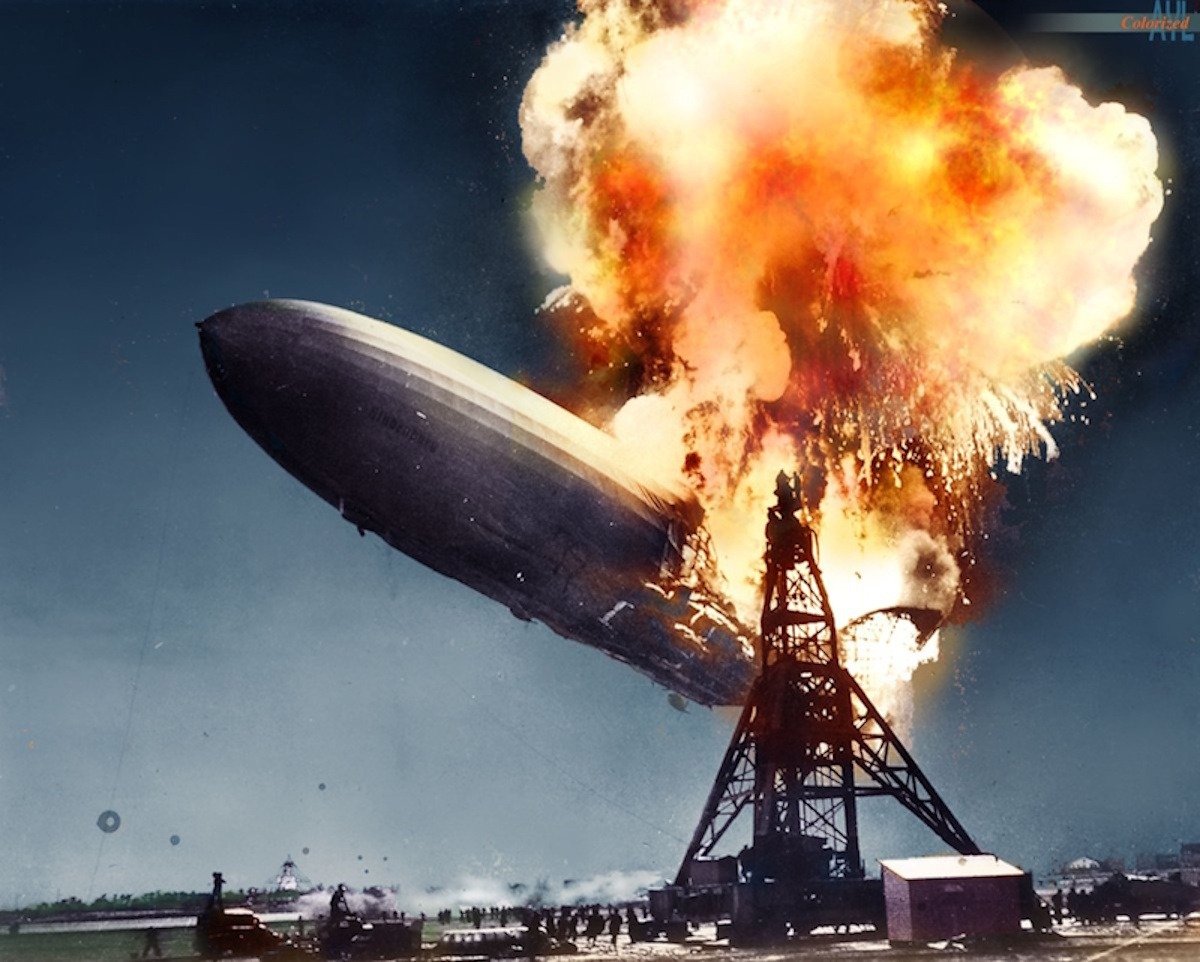
In the nearly 9 decades since the disaster, multiple causes have been given for the fire, including the presence of flammable resin on the airship’s cover, static electricity, leaking hydrogen, terrorism, and classifying the incident as an act of God.
Unfortunately, unless you live in Germany or are a true LTA enthusiast, that’s generally the extent of your knowledge of the German airship program.
What most people don’t know is that until the Hindenburg fire, the German Zeppelin Company enjoyed a perfect passenger safety record for the 40-year period it had conducted passenger operations.
Let that sink in for a moment.
No other transportation technology can make that claim.
Adding to the mystique is the fact that the German airships used hydrogen, a very flammable gas, to provide buoyancy.
USN Akron
Ironically, the greatest airship disaster in history with respect to number of fatalities was the US Navy’s Akron, a helium-filled airship approximately the same size and volume as the Hindenburg.
Helium is a nonflammable lift gas that in the 1930s was only available in the US.
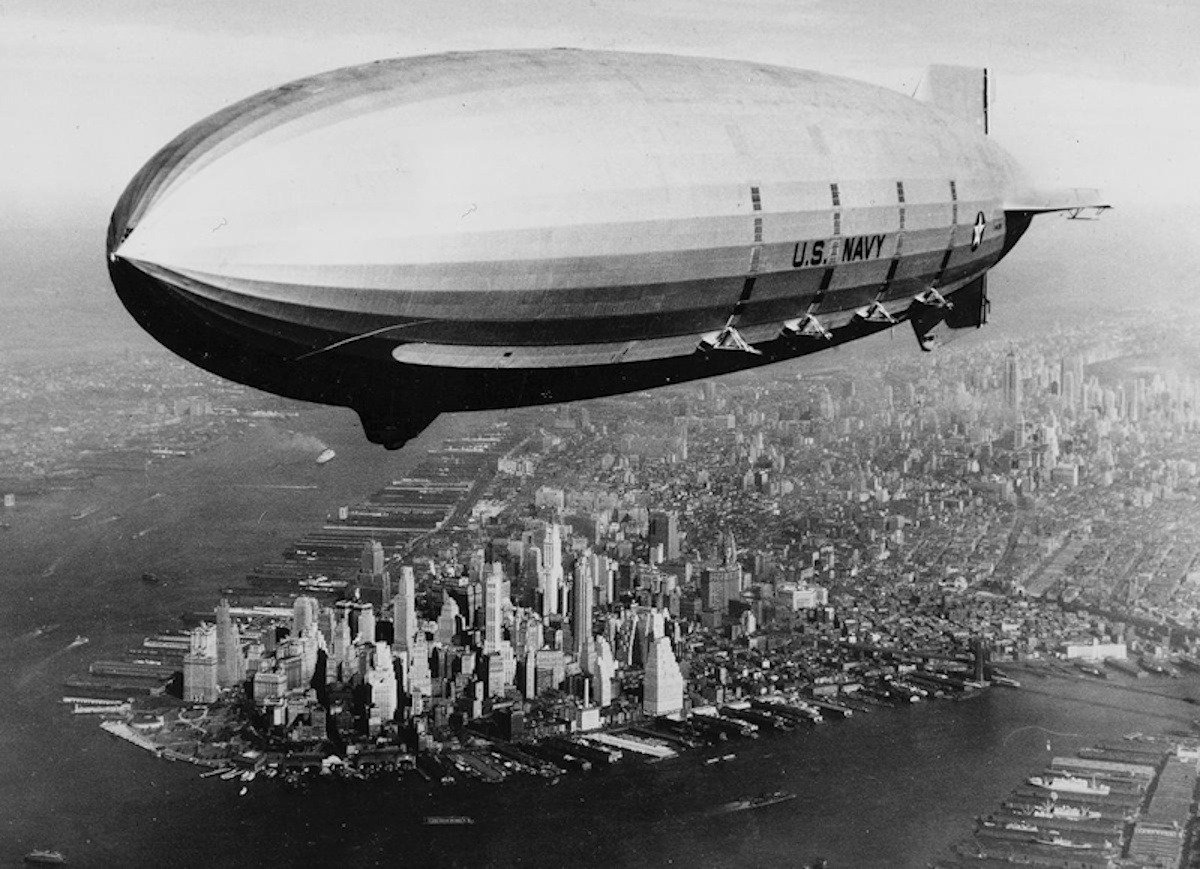
In the early morning hours of April 4, 1935, after finishing maneuvers with the fleet, the Akron encountered a light thunderstorm off the coast of New Jersey, where she sustained significant damage to her tail section, lost buoyancy, and sank into the Atlantic.
73 of the 76 passengers and crew on board perished due to exposure to the elements, as there were no life jackets or life rafts on board.
Two years later, her sister ship, the Macon, met a similar fate off the coast of California. Fortunately, only 3 crewmen perished, as the Navy, having learned from their previous mistake, was better prepared for the incident.
For more information on the Akron and Macon airships, see our video presentation “Understanding the Demise of the Akron and Macon” on the “Pitch Deck” page of this website.
German Airship Operations
By the time the Hindenburg was placed into service, the airship crews of the German Zeppelin Company had accumulated several decades of experience flying in all types of weather across continents, oceans, and around the world.
They took great pride in ensuring passenger safety and, prior to the Hindenburg fire, had enjoyed a perfect passenger safety record that spanned 40 years of operations.
It was common practice for them to fly their airships at low altitudes ranging from several hundred feet up to 3,000 feet off the ground.
This provided the best view of the landscape from the promenade windows as well as the greatest buoyancy for carrying cargo.
The Hindenburg’s cruising speed was 75 mph, which is still considered fast by today’s standards given that modern cruise ships only travel at 20 knots, or about 24 mph.
Although filled with hydrogen, the Hindenburg’s crew had no issue with flying their airships into thunderstorms, where they would often be subjected to lightning and St. Elmo’s Fire (static electricity discharge).
Because of its size and stability, passengers were free to move about the passenger areas while the airship was in motion.
There was little sense that the airship was moving, no airsickness, claustrophobia, social anxiety, fear of flying, or fear of heights.
On multiple occasions, passengers would inquire as to when the airship would be departing only to discover they had already been flying for several hours.
While crossing the Atlantic, it was a common occurrence for passengers to observe ships on the open ocean toiling against violent waves and remark, “I didn’t even realize we were in a storm.”
For more information on this topic, see our video presentation “Passenger Flight Operations” on the “Pitch Deck” page of this website.
We also recommend watching the 1975 version of the full-length movie “The Hindenburg,” available on the “Video Library” page of this website, as it is a historically accurate portrayal of what it was like to travel on the great airship.
The Safety Advantages of Airship Travel
Besides better accommodations, food, and the view, airships are a much safer mode of transportation.
Because they operate at a much slower speed and lower altitude than fixed-wing aircraft, it is easier to contend with any problems that may arise, such as fire or mechanical issues.
For example, an airship does not require motion or fuel consumption to remain airborne, allowing the crew to stop the aircraft if necessary to deal with any problems that may arise—no searching for an available airport or need to perform an emergency landing.
Typically, airships carry enough water to extinguish a small wildfire, with the crews being trained in basic firefighting techniques.
Additionally, if an evacuation is necessary, it’s a short trip to the ground, where the crew can open the exits and deploy emergency slides if necessary.
In today’s air travel, pocket sized lithium-based power banks have become a major problem, as they have been identified as the source for several major aircraft fires, including the Air Busan incident.
On an airship, if necessary, once the source of a fire is isolated, it can be ejected from the aircraft without the need for depressurization or having to descend to a lower altitude first.
In addition to the numerous safety concerns, traveling on today’s commercial aircraft is also inconvenient, as it is nearly impossible to be productive in any capacity while on board.
The rhythm of life is interrupted while being transported from departure to destination.
It’s no wonder people are in such a hurry to complete their journey.
This is the real reason why we pay high prices for fast travel on cramped, inefficient aircraft.
On an airship, however, the spacious, well-designed accommodations allow you to be productive as you travel while simultaneously providing an enjoyable journey with an unparalleled view.